

Lantheus Holdings (LNTH) – Introduction
Lantheus Holdings is a leading innovator in diagnostic and therapeutic imaging, with a strong focus on oncology and cardiovascular care. The company is best known for its flagship product Pylarify, a cutting-edge radiopharmaceutical used in prostate cancer detection, which has served as a major growth engine in recent years. Through its advanced imaging solutions and expanding radiopharmaceutical portfolio, Lantheus plays a pivotal role in improving disease diagnosis and patient management worldwide
Business Overview
Lantheus Holdings’ business centers on innovative diagnostic agents that advance precision medicine. Its core products include Pylarify, a leading PET imaging agent for prostate cancer; Definity, a widely used ultrasound contrast agent; and a portfolio of other radiopharmaceuticals and imaging diagnostics.
The company is at the forefront of precision medicine, enabling more targeted and effective disease detection and monitoring—particularly in oncology and cardiovascular care. Lantheus is also integrating AI into its imaging solutions, aiming to enhance diagnostic accuracy and workflow efficiency.
While the company’s product mix is diversified, its financial performance remains highly dependent on Pylarify’s continued market uptake and competitive positioning, making ongoing innovation and market expansion critical for sustained growth.
Recent Financial Highlights
Lantheus Holdings demonstrates a robust financial profile, shaped largely by strong Pylarify sales and disciplined cash management:
- Revenue Growth:
The past few years have seen exceptional top-line momentum. 2022 revenue was $935 million (up almost 120% YoY), with Pylarify’s success in prostate cancer imaging leading the surge. Recent quarters have reflected some moderation: Q2 2025 revenue was $378 million (down 4.1% year-over-year), and full-year 2025 guidance now stands at $1.48–$1.51 billion as pricing pressure and increased competition impact growth velocity. - Profitability Metrics (EPS & Margins):
Gross margins have remained strong (over 62% in 2022), but higher R&D and SG&A expenses have pressured operating margins. Q2 2025 GAAP net income was $78.8 million (up 26.9% YoY); GAAP EPS was $1.12, though non-GAAP EPS fell 12.8% to $1.57. For the full year, the company expects adjusted EPS in the $5.50–$5.70 range. - Cash Flow & Balance Sheet:
Lantheus boasts outstanding cash flow generation: - Balance Sheet Strength:
Net debt remains low, with strong cash coverage and prudent leverage. Debt was repaid in recent periods, and the company has maintained high liquidity for growth initiatives and strategic flexibility. - Recent Developments & Outlook:
While recent revenue and EPS guidance have been lowered owing to market pressures, Lantheus remains highly profitable, cash generative, and positioned for resilience even in a more challenging competitive environment. Ongoing operational execution, continued Pylarify adoption, and new radiopharmaceuticals are expected to drive long-term shareholder value—even as short-term headwinds curb rapid growth.
In summary, Lantheus is managing a transition from rapid expansion to a steadier, cash-rich profile, with a strong financial foundation to support ongoing R&D and shareholder returns.
Growth Drivers for Lantheus Holdings
- Rising Demand for Prostate Cancer Diagnostics:
The market for prostate cancer imaging is growing rapidly, driven by increasing incidence rates worldwide and the expanding use of precision diagnostics. Lantheus’ flagship product, Pylarify (piflufolastat F 18), is the dominant PSMA PET imaging agent in the U.S., with over 400,000 scans performed as of early 2025. The global radiopharmaceutical market for prostate cancer imaging is projected to grow at a CAGR of 28.8% from 2025 to 2032, reaching $15.19 billion by 2032, fueled by the aging population and rising adoption of PSMA-targeted therapies. - FDA Approvals and Expanded Indications for Pylarify:
Pylarify received FDA approval in 2021, and ongoing regulatory progress supports potential expanded use in earlier stages of prostate cancer and in metastatic detection. This regulatory momentum is a fundamental growth enabler, helping establish Pylarify as the gold standard for detecting PSMA-positive lesions and low PSA recurrence, outperforming traditional imaging methods. - Pipeline Developments in Oncology and Imaging:
Lantheus is advancing its radiopharmaceutical pipeline beyond Pylarify, including Alzheimer’s diagnostics (MK-6240) and other oncology imaging agents. Research and clinical validation initiatives strengthen its product portfolio and open new diagnostic markets, aligning with the growing focus on precision medicine and targeted patient care. - Strategic Partnerships and Acquisitions:
The company recently acquired Life Molecular Imaging to boost its research and development capabilities and divested non-core assets to focus on high-growth radiopharmaceuticals. Collaborations with urologists, oncologists, and academic centers underpin real-world evidence generation and product adoption while supporting integration into theranostic treatment approaches, combining diagnostics with targeted therapies like Lutetium-177.
These factors collectively position Lantheus for continued robust growth, leveraging its leadership in PSMA PET imaging, expanding its product offerings, and capitalizing on regulatory and clinical advancements in the oncology diagnostics field.
Risks & Challenges for Lantheus Holdings
- Heavy Reliance on Pylarify (Concentration Risk):
A significant portion of Lantheus’ revenue depends on Pylarify sales. Any decline in Pylarify demand, loss of market share, or safety concerns could materially impact financial results. - Intense Competition:
The radiopharmaceutical market is fiercely competitive, with several established and emerging companies developing alternative PSMA PET imaging agents and other diagnostic tools. Competitive innovations could erode Lantheus’ market dominance and pricing power. - Pricing Pressures and Reimbursement Risks:
Ongoing pressure from payers and healthcare systems to reduce costs may limit reimbursement levels for Pylarify and other products. Changes in reimbursement policies or delays in approvals could reduce revenue and margins. - Regulatory and Clinical Trial Uncertainties:
Future FDA approvals for expanded indications or new products are uncertain and subject to rigorous trials and regulatory review. Negative trial outcomes, delays, or stricter regulatory requirements could hinder product launches and limit growth opportunities.
These challenges require Lantheus to continuously innovate, carefully manage market positioning, and engage proactively with regulatory and reimbursement stakeholders to sustain its competitive edge and growth trajectory.
Valuation & Market Sentiment for Lantheus Holdings (LNTH)
- Current Valuation Metrics:
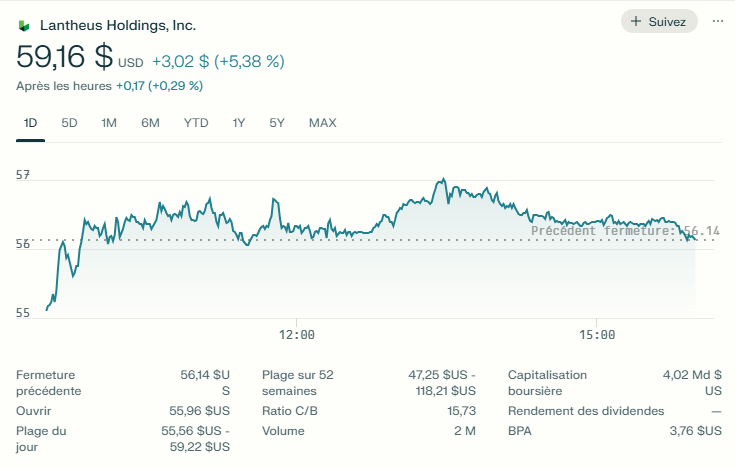
- Market capitalization: Approx. $4.01 billion
- Enterprise Value (EV): Around $3.90 billion
- Trailing Price/Earnings (P/E) ratio: 15.64
- Forward P/E ratio: 11.31
- EV/EBITDA ratio: 7.89
- Price/Sales (P/S) ratio: 2.55
- Price/Book (P/B) ratio: 3.27
These valuations indicate a relatively moderate pricing compared to typical biotech peers, reflecting both growth potential and near-term challenges.
- Financial Efficiency & Profitability:
Lantheus boasts a strong Return on Equity (ROE) of 24.71% and Return on Invested Capital (ROIC) of 15.78%, underscoring its effective capital use. - Analyst Expectations:
Despite recent lowered earnings guidance, analysts project EPS growth, expecting adjusted EPS of $5.50–$5.70 for 2025 with potential acceleration in 2026 driven by pipeline progress and new product approvals. The consensus price target averages around $124.50, implying substantial upside from current levels. - Market Sentiment & Volatility:
The stock has experienced volatility amid Q2 earnings misses and guidance cuts, with a sharp share price decline in early August 2025. Currently, LNTH trades below its 50-day and 200-day moving averages, with technical indicators suggesting oversold conditions, attracting potential value investors. However, risks remain given the biotech sector’s inherent regulatory and competitive uncertainties. - Undervalued or Priced for Perfection?:
Given the forward P/E near 11 and strong cash flow generation, Lantheus currently appears undervalued relative to its growth prospects and long-term market position. While recent volatility reflects execution challenges, the stock offers a downside buffer compared to biotech peers typically priced for more aggressive growth scenarios.
In summary, Lantheus Holdings’ valuation metrics and analyst outlook point to an attractive risk/reward profile at current levels, supported by robust profitability and promising pipeline catalysts, though investors should weigh sector volatility and competitive pressures.
Conclusion
Lantheus Holdings (LNTH) stands out as a high-growth leader in oncology imaging, driven by its flagship product Pylarify and a promising pipeline in precision diagnostics. The company’s strong financial position, solid cash flow, and strategic focus on innovation support its potential for sustained long-term growth.
However, LNTH carries inherent risks, including heavy reliance on Pylarify sales, ongoing competitive pressures, regulatory uncertainties, and pricing challenges. These factors contribute to stock volatility and require investors to maintain a higher risk tolerance.
Overall, Lantheus is well-suited for long-term investors who can weather fluctuations and are seeking exposure to the evolving, high-potential field of radiopharmaceutical imaging in oncology.